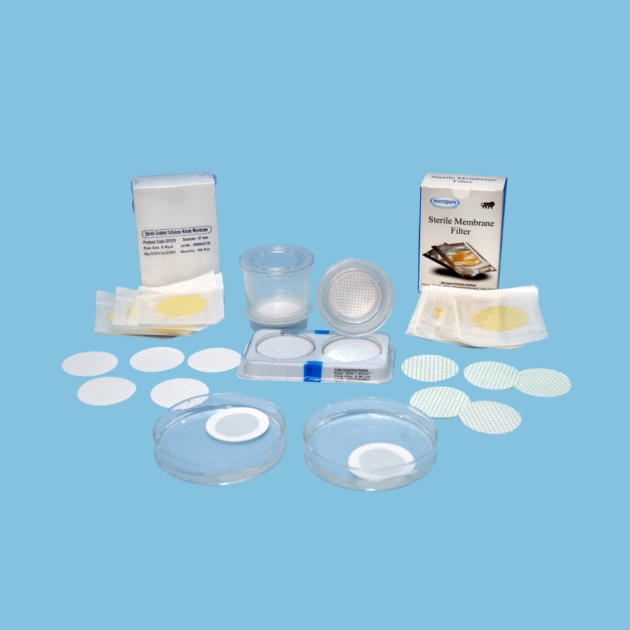



Description
Characteristics:
- Pore Size and Distribution:
- Plain cellulose nitrate membranes typically have uniform pore sizes, which can be selected depending on the application requirements.
- They offer precise filtration capabilities due to their well-defined pore structures.
- Chemical Compatibility:
- These membranes are resistant to a wide range of chemicals, making them suitable for applications where compatibility with different solvents and reagents is necessary.
- Mechanical Strength:
- They exhibit good mechanical strength, ensuring durability and reliability during filtration processes.
- Biological Inertness:
- Cellulose nitrate is biologically inert, which is beneficial for applications involving biological samples and pharmaceutical manufacturing.
Applications:
- Microbiological Testing:
- Used for the filtration and separation of bacteria and other microorganisms in microbiological analysis and water quality testing.
- Analytical Chemistry:
- Employed in analytical procedures for the filtration of solvents, particulates, and samples in laboratories.
- Medical Diagnostics:
- Used in diagnostic devices and assays for the filtration and separation of biomolecules and cells in medical and clinical settings.
- Industrial Filtration:
- Applied in various industrial processes for the filtration of liquids and gases to remove contaminants and ensure product purity.
- Environmental Monitoring:
- Used in environmental monitoring equipment for air and water filtration to analyze particulates and contaminants.
- Food and Beverage Industry:
- Ensures quality and safety by removing impurities and contaminants from food and beverage products during production.