
Description
Features and Characteristics:
- Grid Pattern:
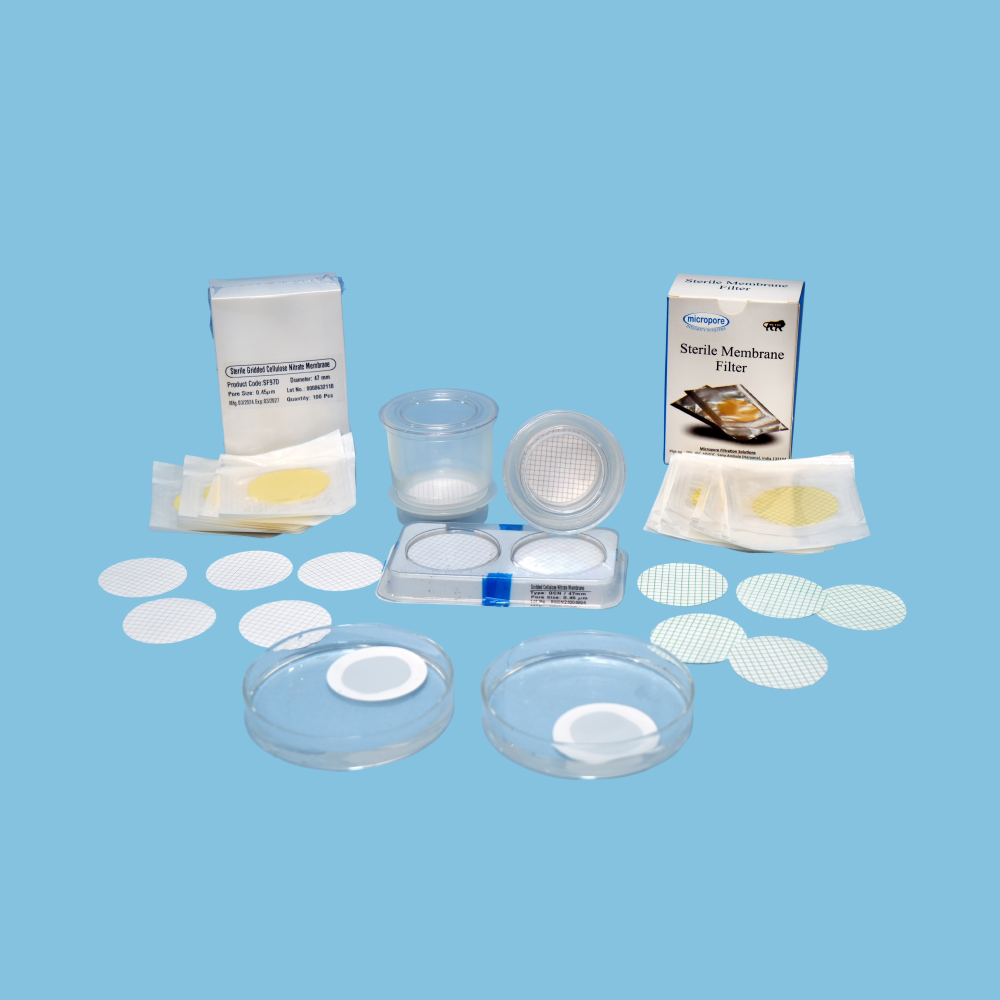
- The main distinguishing feature of GCN membranes is the presence of a visible grid pattern on the surface.
- Grids are typically etched or printed onto the membrane surface in a precise and uniform manner.
- Enhanced Usability:
- Grids provide a convenient reference system for sample identification and location during analysis.
- They facilitate accurate counting and positioning of microorganisms or particles captured on the membrane.
- Precision and Consistency:
- GCN membranes maintain the inherent properties of cellulose nitrate, such as precise pore size distribution and chemical resistance.
- The grid pattern does not interfere with the filtration performance or the analytical results.
- Compatibility:
- Like plain cellulose nitrate membranes, GCN membranes are compatible with a wide range of solvents and reagents commonly used in laboratory applications.
- They are suitable for microbiological testing, air and water quality monitoring, and other analytical procedures.
Applications:
- Microbiological Analysis:
- Used extensively in microbiology laboratories for microbial enumeration, such as counting colony-forming units (CFUs) of bacteria.
- Grids assist in locating and counting colonies accurately, aiding in quantitative analysis.
- Particle Counting and Sizing:
- Applied in environmental monitoring and industrial quality control for particle counting and size analysis.
- Grids provide a visual aid for precise particle identification and measurement.
- Quality Control in Food and Beverage Industry:
- Ensures product safety and quality by filtering and counting contaminants and microorganisms in food and beverage samples.
- Research and Development:
- Valuable in research settings for membrane-based assays, filtration studies, and material science applications requiring precise sample handling and analysis.
Gridded Cellulose Nitrate membranes are particularly valued in fields where accurate and reliable quantitative analysis is crucial. Their grid pattern enhances efficiency and precision in various laboratory procedures, making them a preferred choice in microbiology, environmental sciences, and quality control applications.